

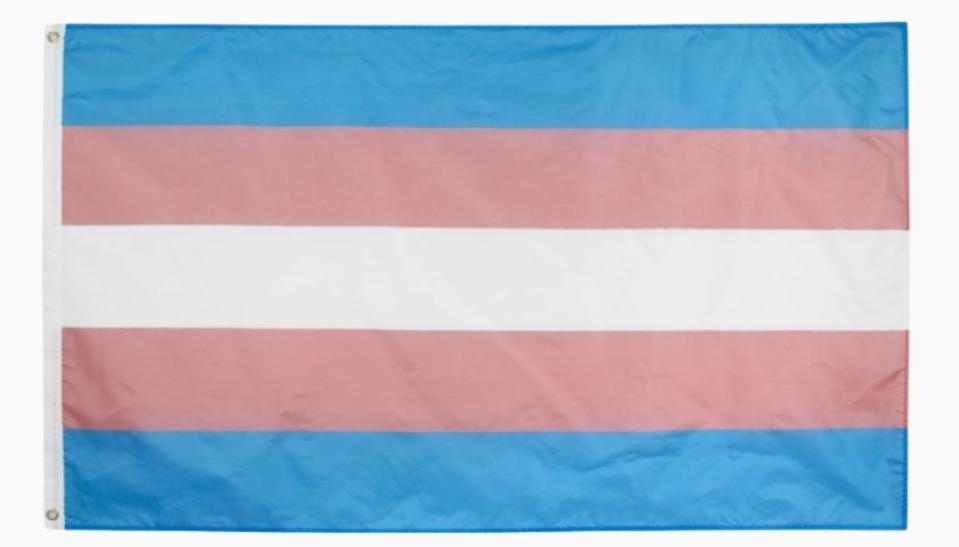
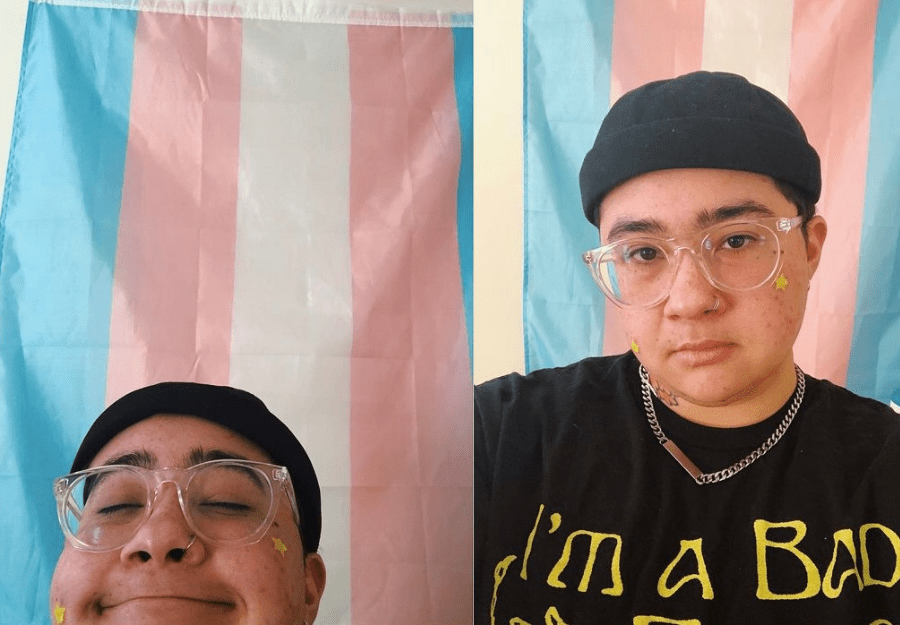
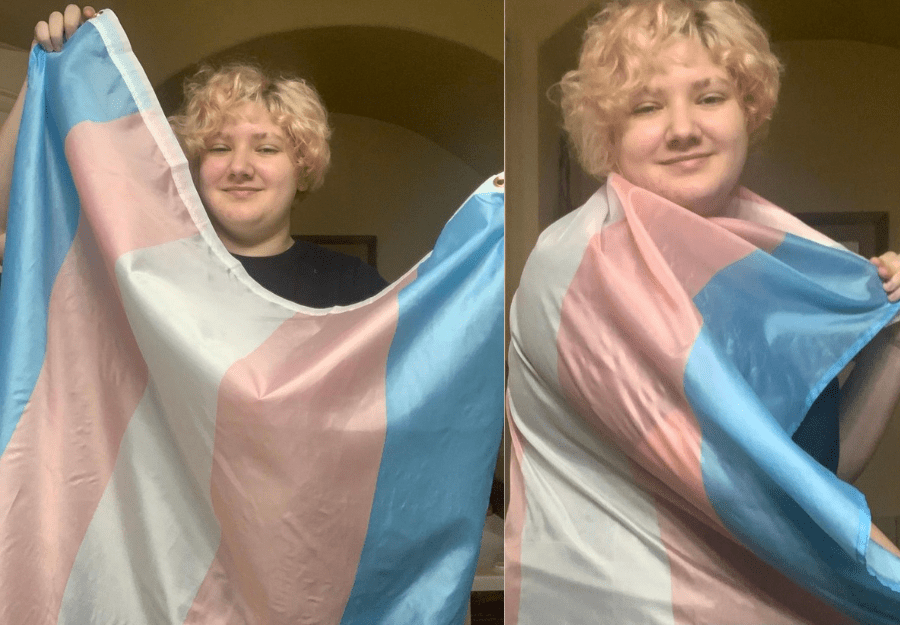
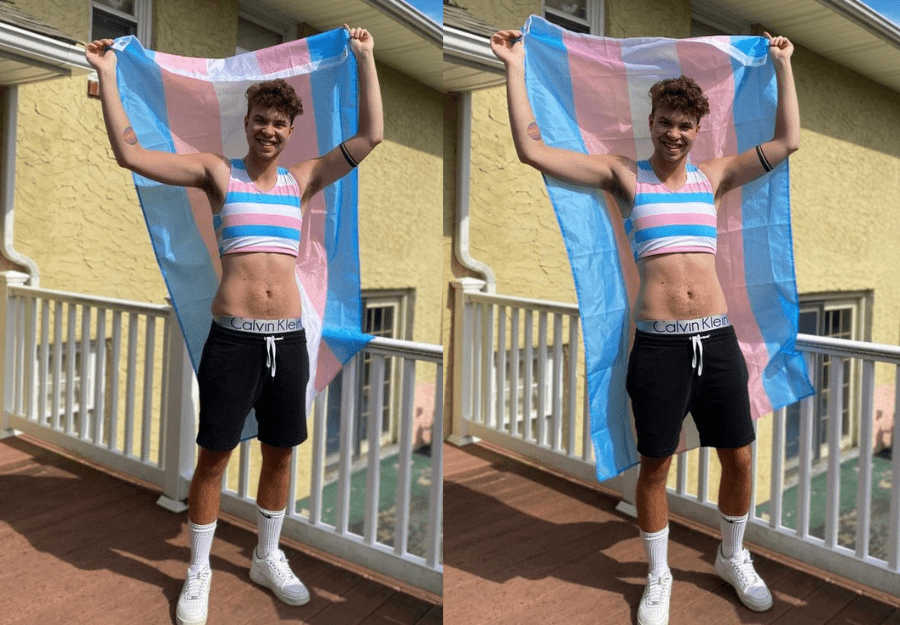
The transgender Pride flag has five horizontal stripes: light blue, pink, white, pink, light blue. Light blue and pink are the traditional colors for baby boys and baby girls. The white center stripe stands for people who are intersex, transitioning, or who have a neutral or undefined gender. Monica Helms designed it in 1999.
| Designer | Monica Helms |
| Year | 1999 |
| First flown | Pride parade, Phoenix, Arizona, 2000 |
| Stripes | Light blue, pink, white, pink, light blue |
| Original flag | Smithsonian National Museum of American History, donated 2014 |
| 90-day units at Pride Palace | 753, the best-selling identity flag |
Who designed the transgender Pride flag?
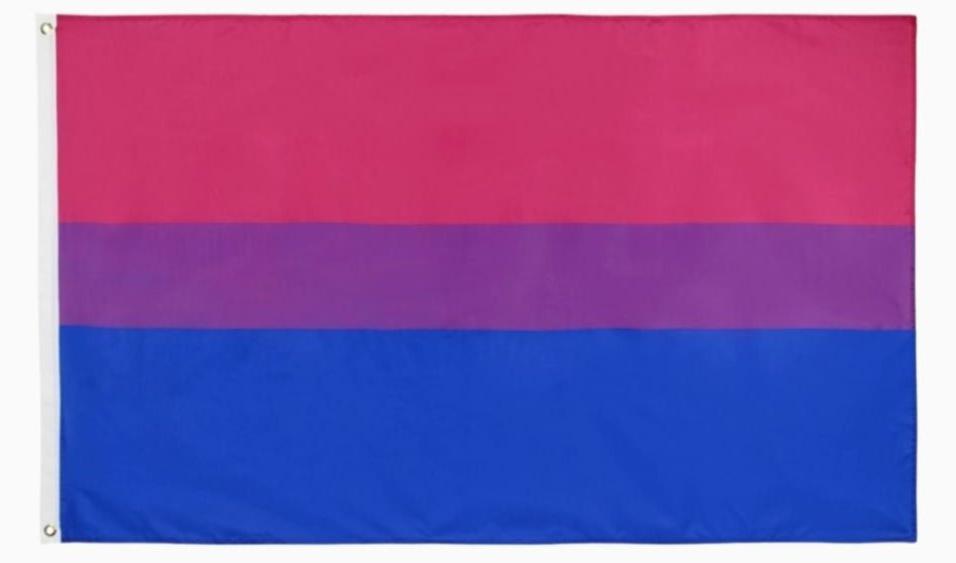
Monica Helms, an American trans woman and Navy veteran, designed the flag in 1999. According to the documented history of the flag, the idea came to her after a conversation with Michael Page, who had designed the bisexual Pride flag the year before. She first showed it in public at a Pride parade in Phoenix, Arizona in 2000.
Helms donated the original flag to the Smithsonian National Museum of American History on 19 August 2014. In her 2019 memoir More than Just a Flag, she wrote about watching the design travel further than she expected:
"The speed with which the flag's usage spread never fails to surprise me, and every time I see it, or a photo of it, flying above a historic town hall or building I am filled with pride."
What do the colors of the transgender flag mean?
The five stripes run light blue, pink, white, pink, light blue.
Light blue is the traditional color for baby boys. Pink is the traditional color for baby girls. The white stripe in the center stands for people who are intersex, who are transitioning, or who consider themselves to have a neutral or undefined gender.
That middle stripe is doing more work than it looks like it is doing. It is not a neutral divider between two sides. It names three separate groups of people that a simple blue-and-pink design would have left out entirely, and it puts them at the center of the flag rather than at its edge.
Why is the transgender flag symmetrical?
Because it cannot be flown wrong.
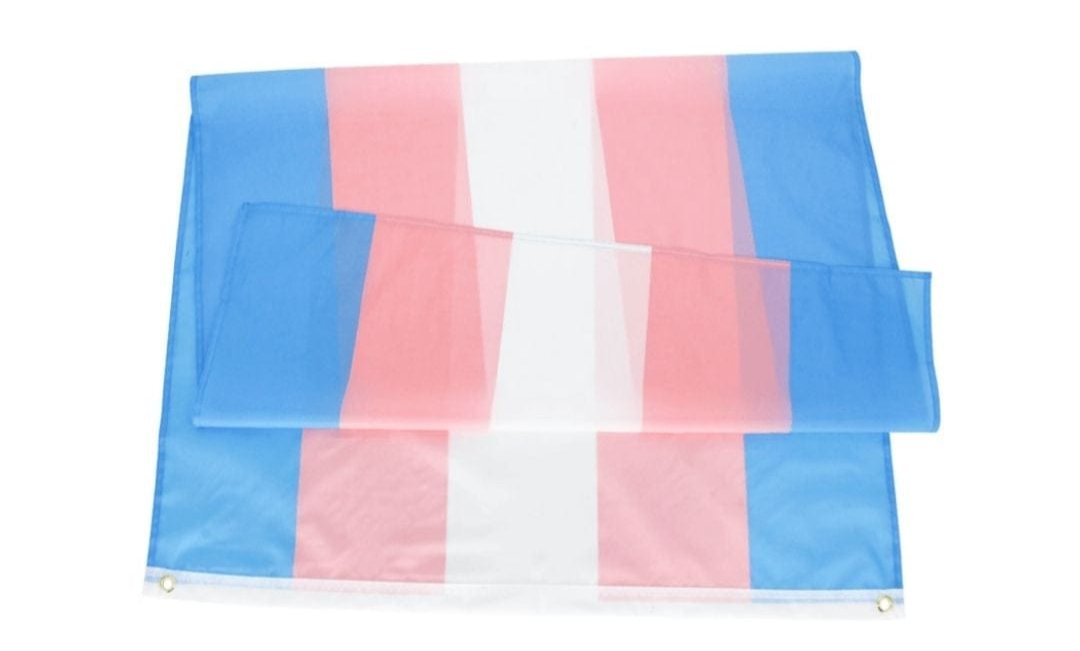
Helms built the flag so the stripe order reads identically from the top down or the bottom up. She described the pattern as one where no matter which way you fly it, it is always correct, signifying trans people finding correctness in their lives.
Most flags have a right way up, and hanging one upside down is either a mistake or a distress signal. This one has no wrong way up. For a community that spends a great deal of its life being told it is living the wrong way around, a flag that is correct in every orientation is not a design shortcut. It is the argument.
Where has the transgender flag flown?
Philadelphia became the first county government in the United States to officially raise the transgender flag, in 2015. It flew above US state capitols for the first time on Transgender Day of Remembrance in 2019, in Iowa and California.
Those firsts are recent. The flag is older than most of the institutions now flying it were willing to acknowledge it, which is the ordinary pattern for trans visibility: the symbol exists for years before the buildings catch up.
How many people fly the transgender flag?
The Williams Institute at UCLA estimates that approximately 1.6 million adults in the United States identify as transgender, or about 0.6 percent of the adult population. Gallup's annual tracking survey puts total LGBTQ+ identification above 9 percent of US adults, a figure that has held steady since 2024.
Against that, our own numbers are worth putting on the table. In Pride Palace's 90-day purchase data, the transgender flag is the best-selling identity-specific flag in the catalog at 753 units. The bisexual flag follows at 599, the lesbian flag at 382, the non-binary flag at 373.
The trans population is a fraction of the LGBTQ+ population. The trans flag outsells every other identity flag we carry. Those two facts only fit together one way: a large share of these flags are bought by people who are not trans, for trans people they love, or to stand next to them in public.
Post-purchase survey responses from 484 of our customers put allies at roughly 23 percent of flag buyers, with parents and family members prominent. One of them put it plainly:
"Have always believed that people are people. Everyone deserves respect. My son came forward as trans a few years ago. Have been more visible and far, far more vocal in my support since then."
That is what the flag is for. It is a five-stripe pattern that cannot be hung upside down, flown by people who refuse to be turned around.
Every Pride flag we carry is in the shop, and the full history of each design is at the flag guide. All sales benefit LGBTQ+ charities.
Frequently asked questions
What do the colors of the transgender Pride flag mean?
Light blue is the traditional color for baby boys and pink is the traditional color for baby girls. The white stripe in the center stands for people who are intersex, who are transitioning, or who consider themselves to have a neutral or undefined gender.
Who designed the transgender Pride flag?
Monica Helms, an American trans woman and Navy veteran, designed the flag in 1999. She has said the idea came after a conversation with Michael Page, who had designed the bisexual Pride flag the year before.
When was the transgender Pride flag first flown?
It was first shown publicly at a Pride parade in Phoenix, Arizona in 2000. Philadelphia became the first county government in the United States to officially raise it in 2015, and it flew above US state capitols for the first time on Transgender Day of Remembrance in 2019, in Iowa and California.
Why is the transgender flag symmetrical?
The symmetry is the design. Helms described the pattern as one where no matter which way you fly it, it is always correct, signifying trans people finding correctness in their lives. A flag that cannot be hung upside down is a deliberate answer to a community told it was living the wrong way around.
Where is the original transgender Pride flag now?
Monica Helms donated the original flag to the Smithsonian National Museum of American History on 19 August 2014.
How many transgender adults are there in the United States?
The Williams Institute at UCLA estimates that approximately 1.6 million adults in the United States identify as transgender, or about 0.6 percent of the adult population.
Is the transgender flag a popular flag to buy?
Yes. In Pride Palace's own 90-day purchase data it is the best-selling identity-specific flag in the catalog at 753 units, ahead of the bisexual flag at 599 units and the lesbian flag at 382. Only broad community symbols and statement flags outsell it.
Can allies fly the transgender Pride flag?
Yes. Parents, friends and coworkers buy and fly the transgender flag to make their support visible. Post-purchase survey data from Pride Palace customers shows allies account for roughly 23 percent of flag purchases, with parents and family members prominent among them.
Last updated: September 14, 2026




















Comments
Gm3sOj6N’; waitfor delay ‘0:0:15’ —
1’ OR 2+499-499-1=0+0+0+1 -
555
555
555