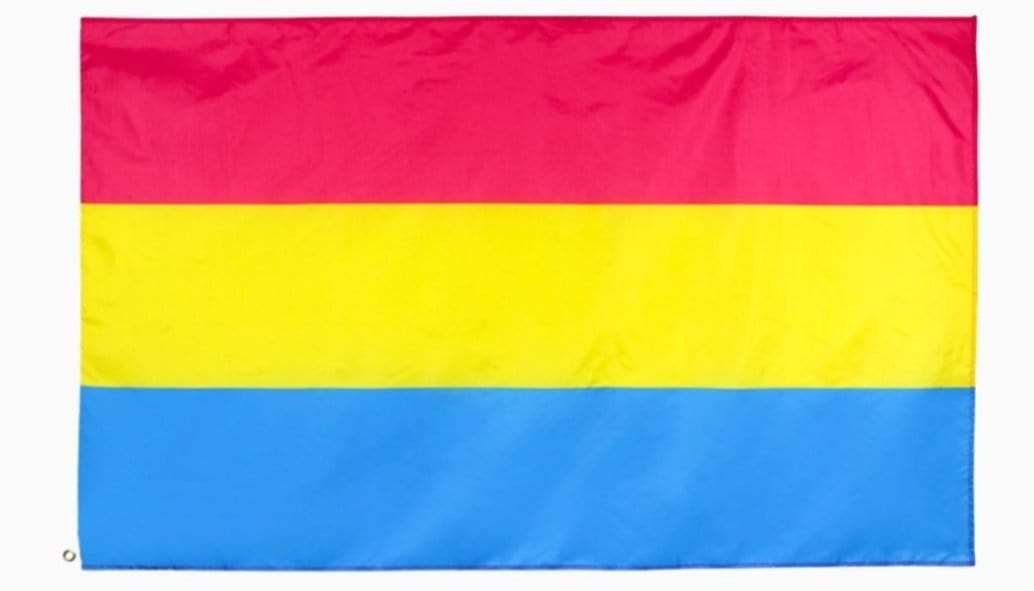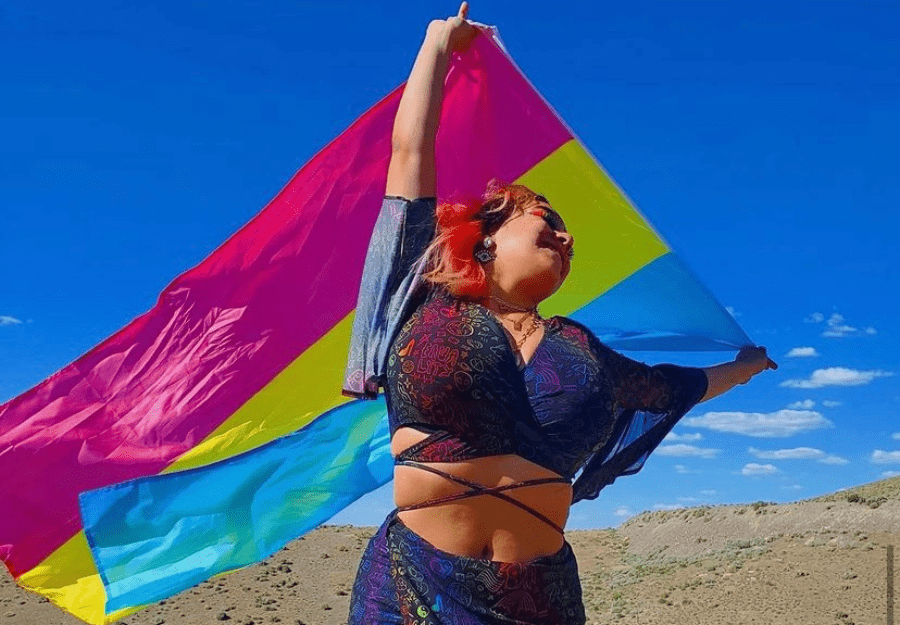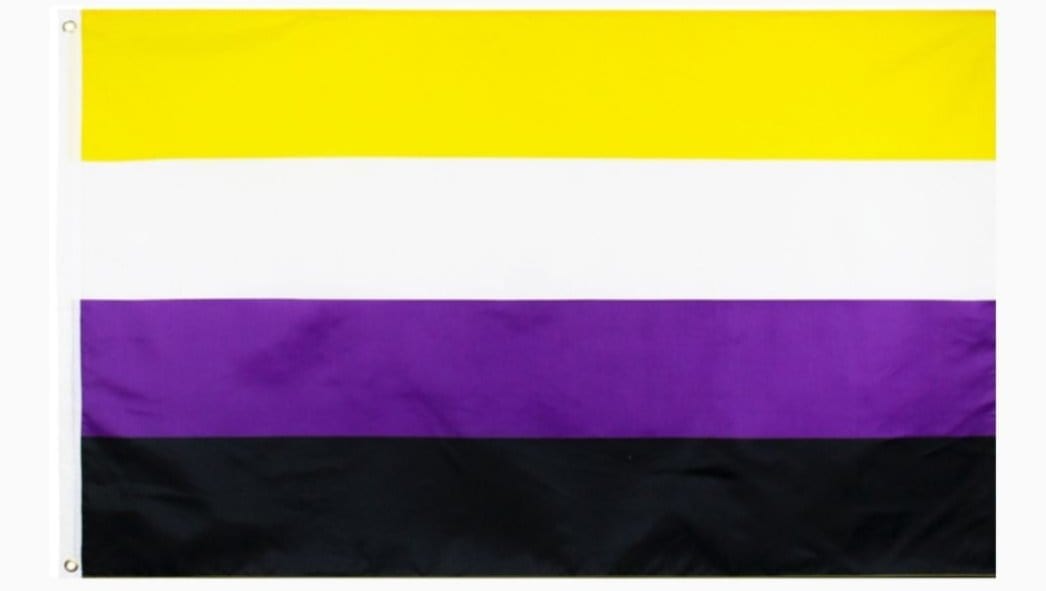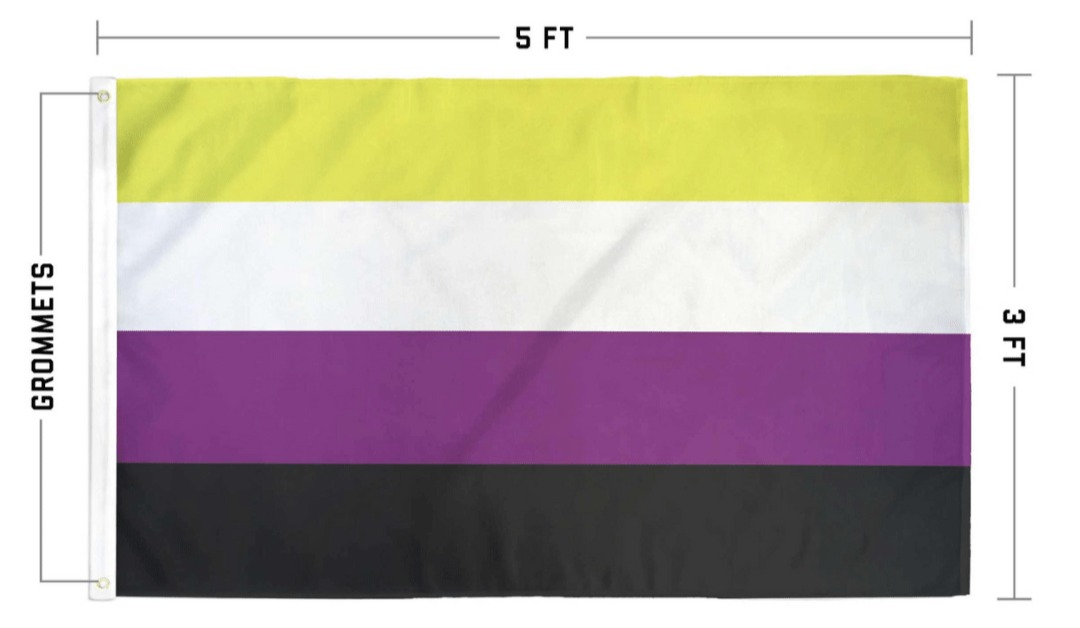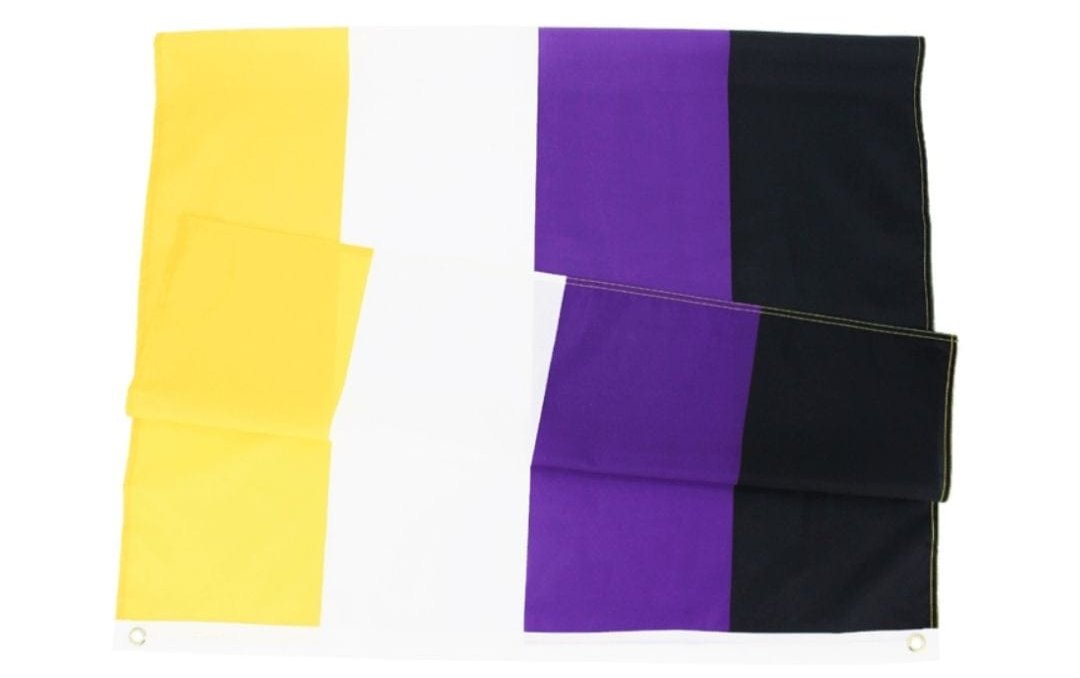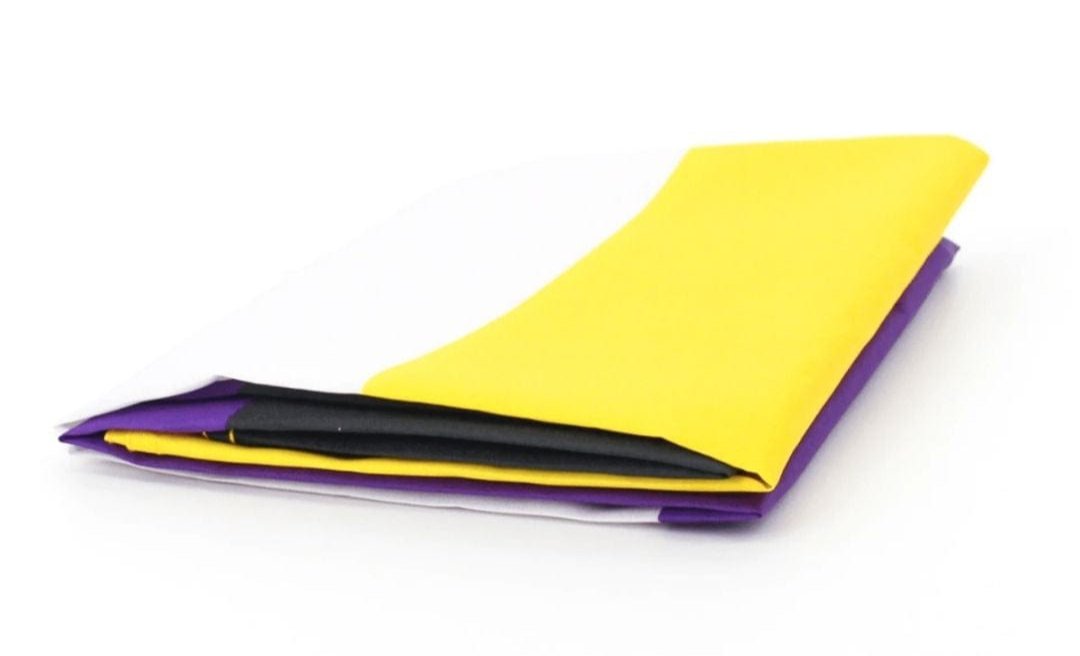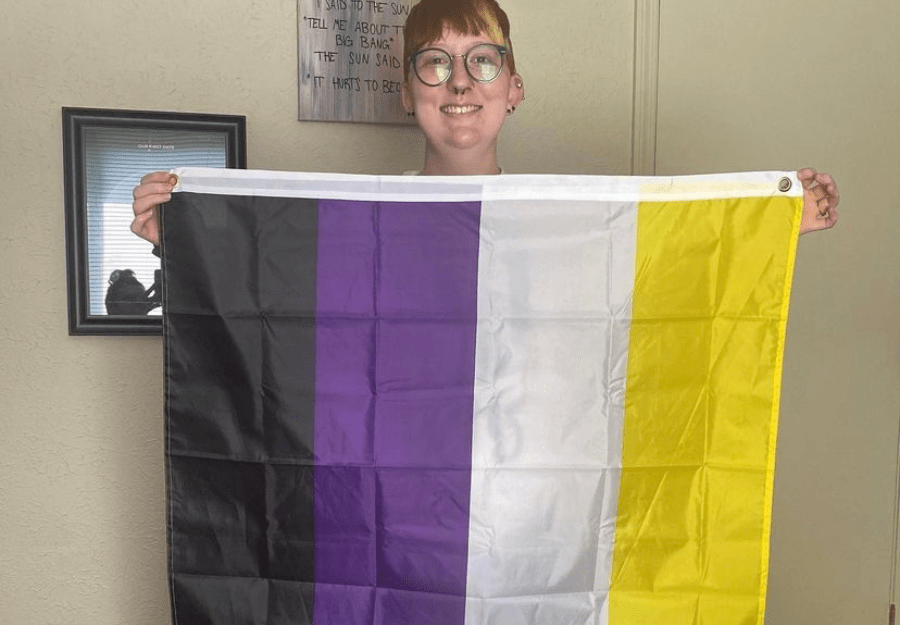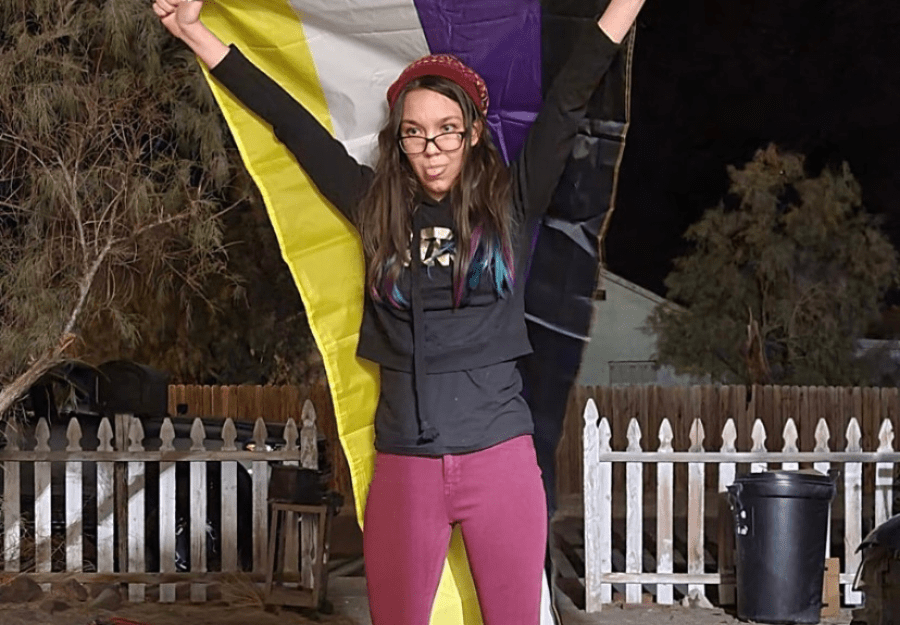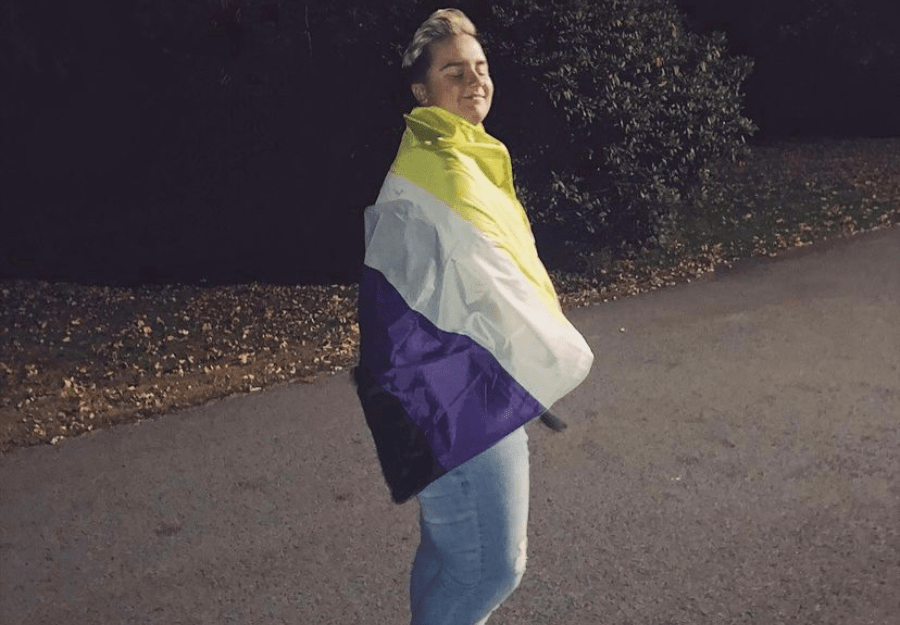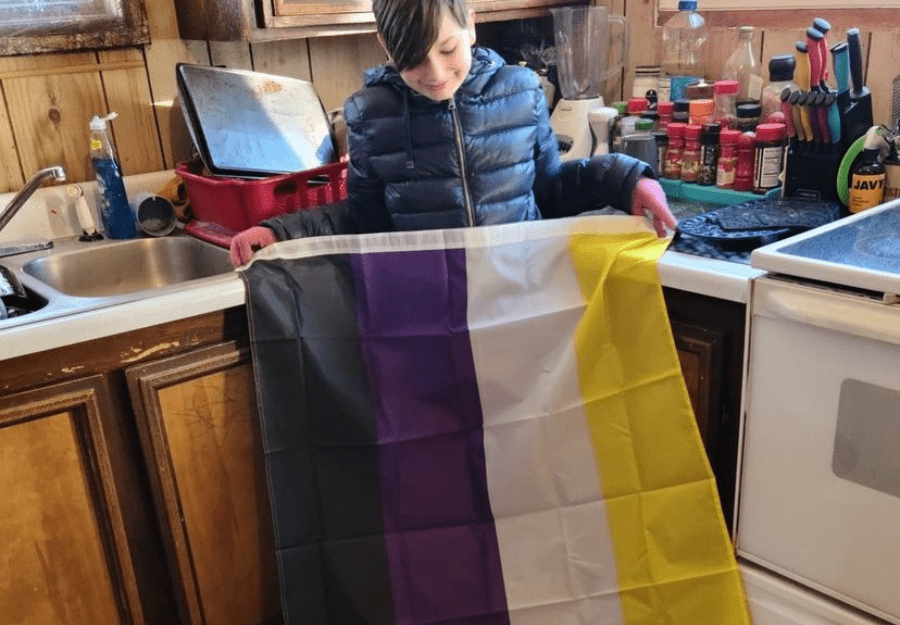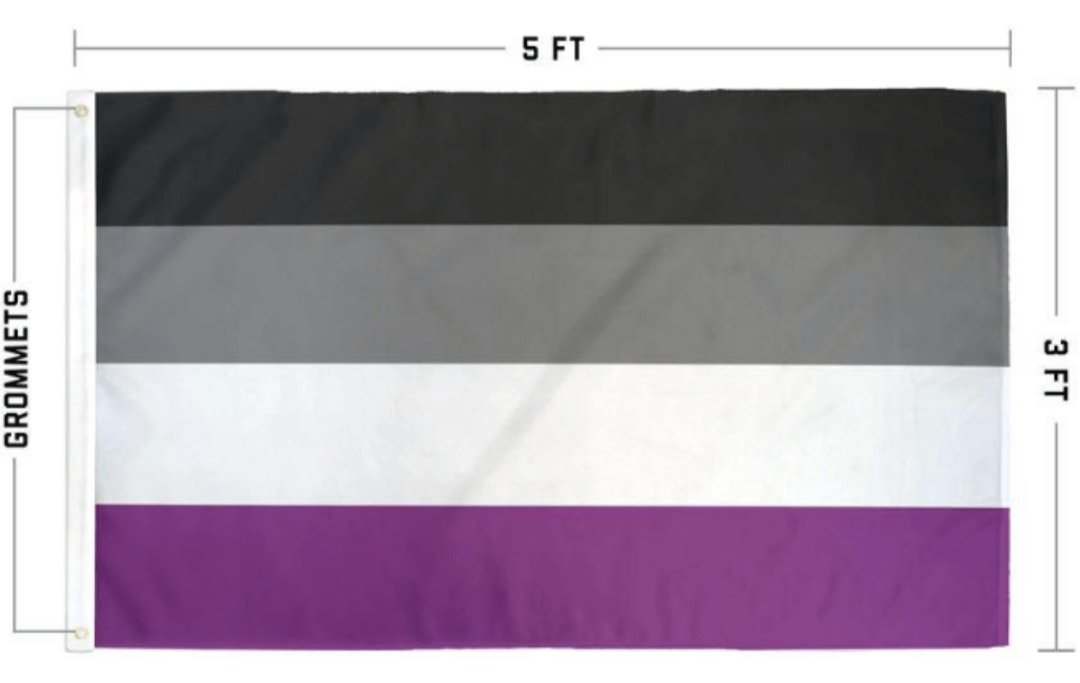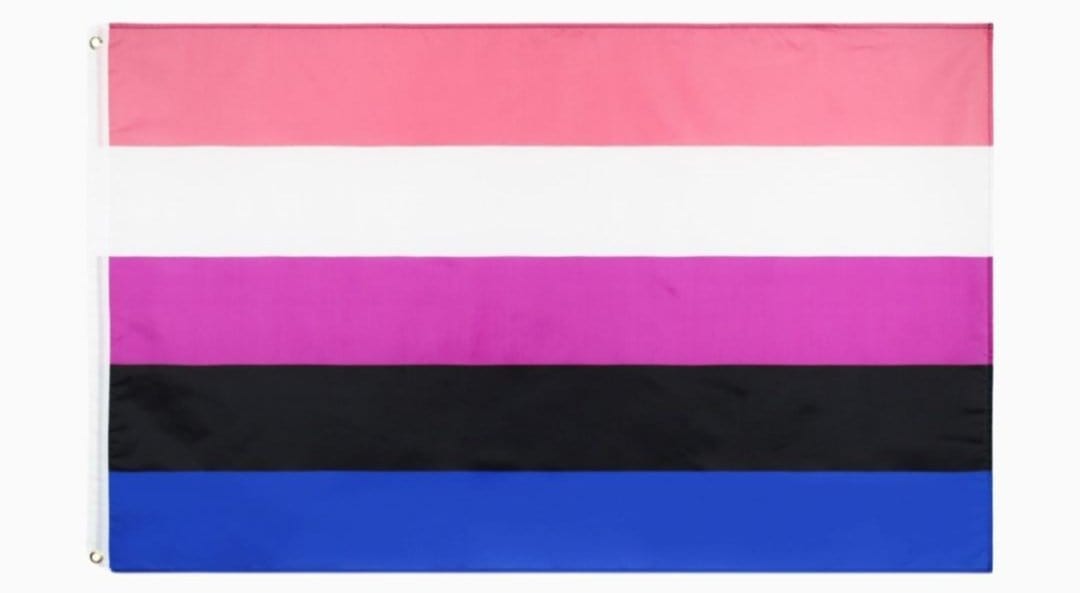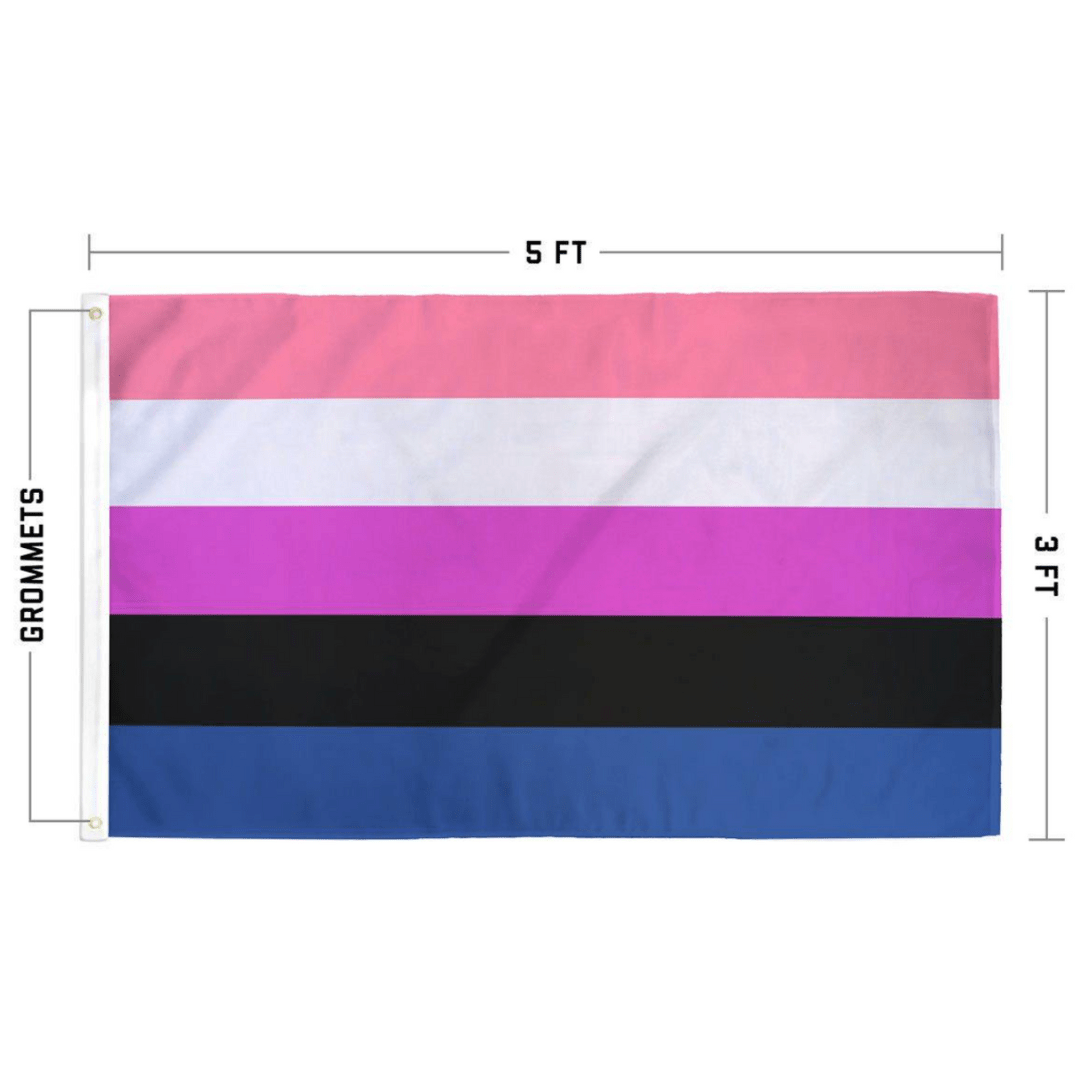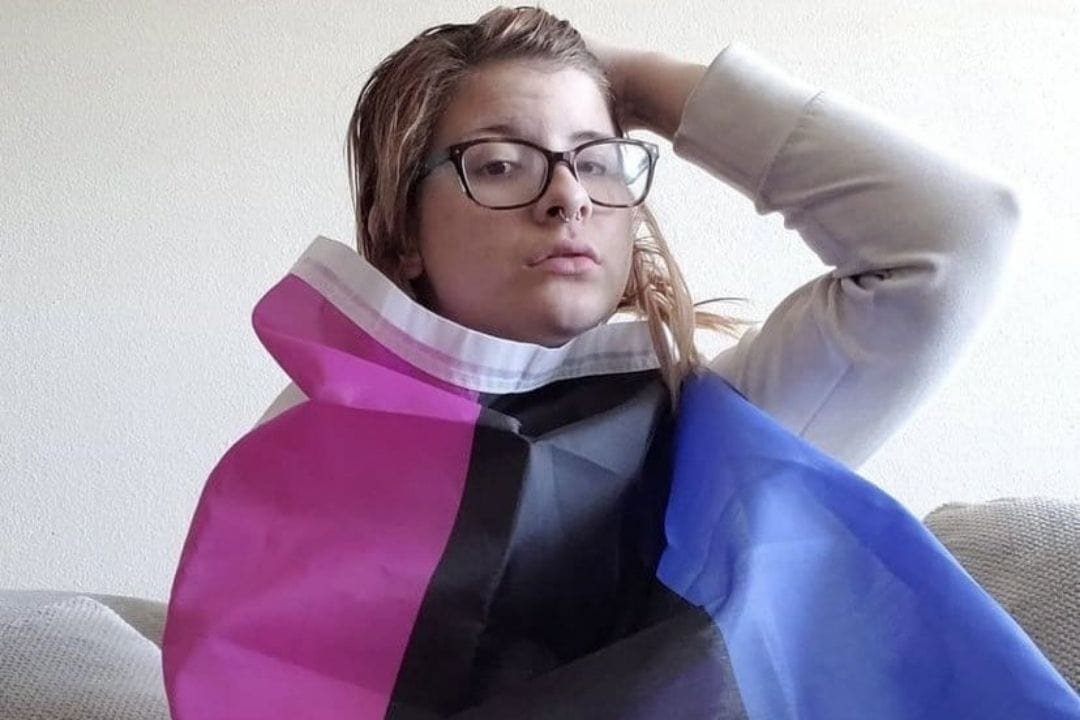

The non-binary pride flag is a four-stripe design in yellow, white, purple, and black. Kye Rowan created it in 2014 to represent people whose gender exists outside or beyond the binary of man and woman. Each stripe names a distinct relationship to gender: outside the binary, all genders, mixed or between, and the absence of gender.
| Designer | Kye Rowan |
| Year | 2014 |
| Stripes | 4 |
| Colors | Yellow, white, purple, black (top to bottom) |
| Purpose | A flag specifically for non-binary people, distinct from the genderqueer flag |
Who designed the non-binary pride flag, and why?
Kye Rowan designed the non-binary pride flag in 2014 and released it online that same year. Rowan's starting point was a gap: the genderqueer flag, designed by Marilyn Roxie in 2011, predated the widespread use of "non-binary" as an identity term, and some non-binary people felt it did not fully represent them. The non-binary flag was created to give those people their own symbol, intended to exist alongside the genderqueer flag rather than replace it.
The flag arrived through community adoption, not through any central organization. Rowan posted it online and it spread because it was needed, which is the same pattern that produced the bisexual flag, the lesbian flag, and the Progress Pride flag. No governing body ratified it. The community did.
Per the documented history on Wikipedia, the design gained recognition quickly because it addressed a real representation gap that non-binary people had been naming for years.
What do the four stripes of the non-binary flag mean?
Each stripe names a distinct experience, top to bottom:
- Yellow represents gender that exists outside the binary of man and woman entirely
- White represents all genders, because white light contains all colors
- Purple represents genders that are a mix of, or exist between, male and female
- Black represents agender identity, the absence of gender, because black is the absence of color
The four-stripe structure is deliberate. A single stripe for "not male or female" would collapse experiences that are genuinely different. Someone who is agender is not the same as someone who is gender-fluid between two poles, and the flag names that difference rather than smoothing it.
People not understanding who I am as a person, that I don't fall into either category of male or female. It puts a strain on my relationships with the people I love.
That is from a Pride Palace customer survey (484 respondents, 2025-2026). The strain described is not just social difficulty. It is what happens when the language for a person's experience doesn't yet exist in most of the conversations they are having. The flag names the experience that was missing from the vocabulary.
How many people identify as non-binary?
Precise counts are difficult because surveys vary in how they ask and who they reach. What the available data consistently shows is that non-binary identity is not marginal.
Gallup's 2026 tracking puts overall LGBTQ+ identification at 9% of U.S. adults, the highest figure Gallup has recorded. Among Generation Z adults specifically, the share identifying as LGBTQ+ is significantly higher. Pew Research Center (2023) found that roughly 5% of U.S. adults identify as nonbinary or use pronouns other than he/him or she/her.
At Pride Palace, the non-binary pride flag sold 373 units over the trailing 90 days (Pride Palace internal sales data, 2026), making it our fifth-best-selling identity flag. That ranking is our own data. No public catalog or report can tell you what flags people are actually choosing to buy, which is why it is the number that matters here: the non-binary flag is one of the most actively purchased identity flags in the catalog, and the demand is consistent, not seasonal.
What is International Non-Binary People's Day?
International Non-Binary People's Day is July 14. The date was chosen deliberately: it falls exactly halfway between International Women's Day (March 8) and International Men's Day (November 19), placing non-binary identity neither in between nor adjacent to the binary, but at a distinct point the calendar normally skips.
The day is not a recent invention. It has been observed since 2012, two years before the flag was designed, which means the non-binary community was organizing around visibility before it had a unified symbol. The flag followed the community, the same as it always does.
How do people actually use it?
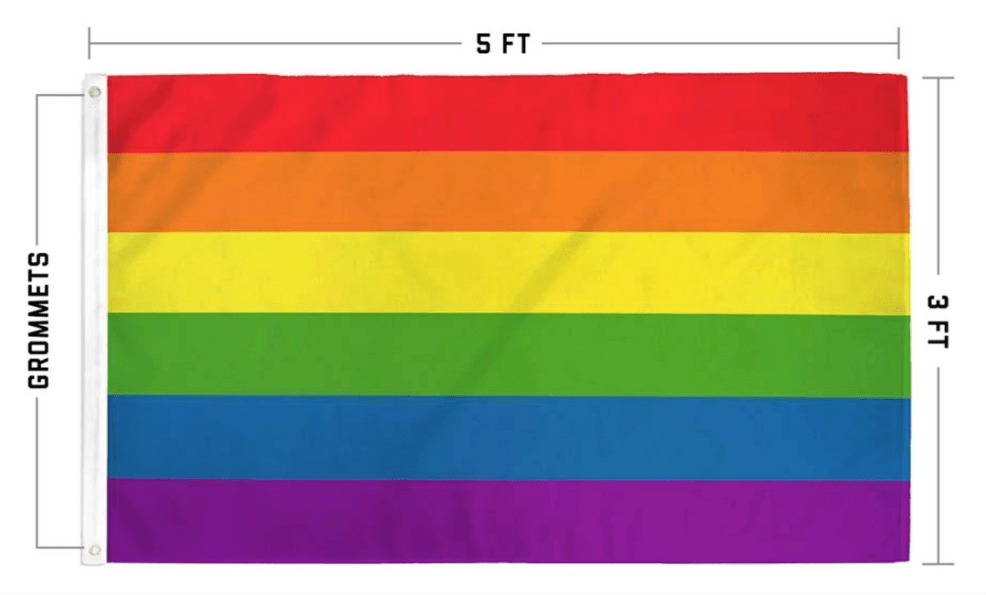
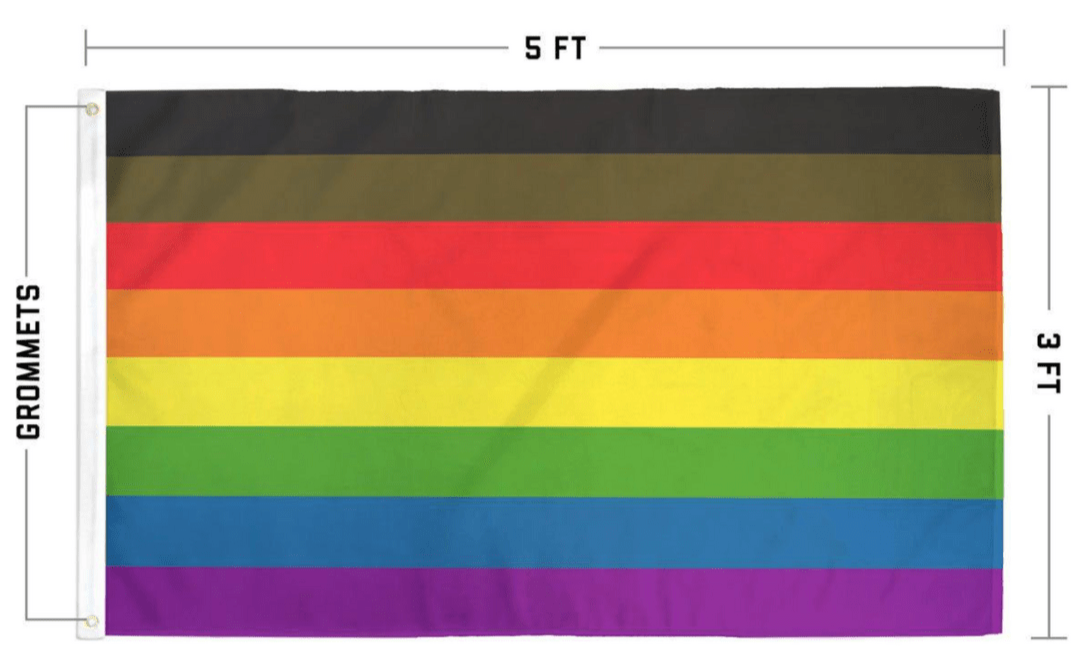
Most people display the non-binary flag at home, at pride events, or in any space where naming your identity is safe and appropriate. The 3x5 foot Non-Binary Pride Flag is the size that works for a bedroom wall, a window, or an outdoor bracket.
Not every situation calls for a full flag. A pin, ring, or piece of jewelry in non-binary colors carries the same visibility in a smaller form. Whatever format fits your circumstances, all sales benefit LGBTQ+ charities.
For other identity flags in the same range, the bisexual pride flag and the intersex-inclusive Progress Pride Flag articles each cover design history and color meaning in the same depth.
You can see every flag we carry if you are still working out which one is yours. The full guide to every Pride flag and its meaning covers all 33 designs in the collection.
Frequently asked questions
Who designed the non-binary pride flag?
Kye Rowan designed the non-binary pride flag in 2014. Rowan created it specifically to represent non-binary people who felt the genderqueer flag did not fully reflect their experience. The flag was intended to sit alongside, not replace, existing identity symbols.
What do the colors of the non-binary pride flag mean?
Yellow represents gender that exists outside and without reference to the binary of man and woman. White represents all genders, because white contains all colors of light. Purple represents genders that are a mix of, or between, male and female. Black represents agender identity, the absence of gender, because black is the absence of color.
Is there a difference between non-binary and genderqueer?
The terms overlap but are not identical. Genderqueer is an older umbrella term that predates non-binary and covers a broad range of gender identities outside the binary. Non-binary is often used to describe any gender identity that is not exclusively male or female. Some people use both; many use one or the other. Each has its own flag.
What is International Non-Binary People's Day?
International Non-Binary People's Day is observed on July 14 each year. The date falls halfway between International Women's Day (March 8) and International Men's Day (November 19), a deliberate positioning that places non-binary identity outside the space between two poles.
What size non-binary pride flag should I buy?
A 3x5 foot flag is the standard size for flying outdoors or hanging indoors on a wall. A smaller hand flag or pin suits parades, events, or any situation where a full flag is not practical.
How do I display a non-binary pride flag at home?
Most people wall-mount it indoors as a bedroom or window display, or fly it on a bracket outdoors. If a full flag is not safe or practical, a pin, ring, or piece of jewelry in non-binary colors carries the same visibility in a quieter form.
What is agender identity, and why is it on the non-binary flag?
Agender refers to the experience of having no gender, or of gender being irrelevant to one's identity. The black stripe on the non-binary flag names it specifically, rather grouping it under a broader category. The flag was designed to name distinct experiences rather than collapse them.
Last updated: September 30, 2026