New York state legislators introduced a bill in August 2026 to repeal the 1985 law that closed gay bathhouses. The bill cites four decades of HIV prevention advances, including PrEP and the undetectable equals untransmittable consensus. It was introduced by Senator Erik Bottcher and Assembly member Tony Simone.
The headline is simple. What is behind it is not.
What the 1985 ban actually was
In October 1985, New York City Health Commissioner David Sencer ordered the closure of gay bathhouses and sex-on-premises clubs. The legal basis was a public health emergency: AIDS had killed tens of thousands of Americans, effective treatment did not exist, and transmission was not well understood. The city argued that bathhouses concentrated high-risk sexual contact in ways that accelerated the epidemic.
The order was contested immediately. Civil liberties organizations and gay advocacy groups argued that the closures were discriminatory, that they would drive sex underground rather than reduce it, and that targeted public health education inside bathhouses was more effective than closure. That argument turned out to be correct, according to subsequent research, but the ban stayed. It was eventually codified into state health law, giving it a durability that outlasted the emergency it was supposed to address.
Per the documented history of gay bathhouses in the United States, New York became one of the most restrictive jurisdictions in the country for these venues, even as they continued to operate legally elsewhere.
What changed in 40 years
The medical landscape of 1985 and the medical landscape of 2026 are not the same landscape.
PrEP (pre-exposure prophylaxis) reduces the risk of HIV transmission through sex by up to 99% when taken as prescribed (CDC HIV data). It has been FDA-approved since 2012 and is now the standard of care for HIV prevention among at-risk populations.
U=U (undetectable equals untransmittable) is now established medical consensus. A person living with HIV who is on effective antiretroviral treatment and has achieved an undetectable viral load cannot transmit HIV sexually. This was not known in 1985. It changes the entire premise of the ban.
The tools to prevent HIV transmission now exist at the individual level. A policy that was a public health response to a crisis without those tools is not the same policy in a world where those tools exist.
That is the core argument of the Bottcher-Simone legislation, as reported by Them: the 1985 ban was a product of its moment, and the moment has passed.
Why this resonates as more than a policy story
Bathhouses were not only sexual venues. In the decades before the AIDS crisis, they were among the few physical spaces where gay and bisexual men could gather without the constant threat of police harassment, exposure, or arrest. They hosted community organizing, informal support networks, and a form of sociality that had nowhere else to go in cities that had not yet built out an openly gay infrastructure.
Their closure in the 1980s removed something that the community had built for itself, at the moment the community needed it most. The men who lost bathhouses also lost partners, friends, and entire social worlds to AIDS in the same years. The grief was compounded and compounding.
The repeal effort in 2026 lands in a week when transgender youth are losing access to gender-affirming care in multiple states, when the Pentagon is removing inclusive spaces from national events, and when the dominant emotional register in LGBTQ+ community spaces is controlled anger at institutions that are failing them. In that context, a story about reclaiming space taken in a moment of fear reads as something larger than its subject.
That is not an analogy. The specific history is the history of AIDS, the specific law is a 1985 New York health code, and the specific legislators are Bottcher and Simone. But the underlying pattern, queer community space taken away under the cover of public health or safety and not given back, is one the community is living through in real time in other forms.
What happens next
The bill has been introduced. It has not passed. New York's legislature has a history of letting LGBTQ+ legislation move slowly, and there is no guarantee this session moves the bill. Opponents are likely to raise public health concerns, even though the public health rationale for the ban has been overtaken by 40 years of medical advances.
The bill is the news. What the bill represents is the argument.
For Pride Palace, the relevance is straightforward: we exist to make LGBTQ+ identity visible, and visibility includes the history of spaces the community built, lost, and is trying to reclaim. You can see every flag and identity symbol we carry in the shop. All sales benefit LGBTQ+ charities.
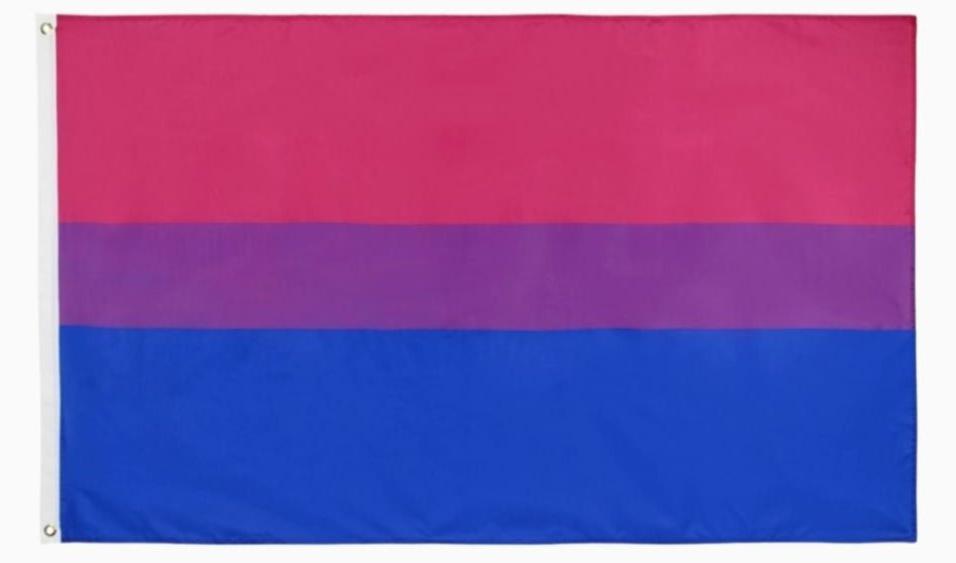
The full guide to Pride flags and their history covers how identity symbols have carried community through periods exactly like this one. For the specific history of bi identity and visibility, the bisexual pride flag article covers how the same dynamics of erasure and reclamation shaped the flag's design.
Frequently asked questions
Why were gay bathhouses closed in New York?
New York City Health Commissioner David Sencer closed gay bathhouses in 1985 at the height of the AIDS crisis, citing them as sites of high-risk sexual contact. The 1985 closure order was codified into state health law, making it one of the longest-standing public health restrictions specifically targeting gay spaces.
Who introduced the New York bathhouse repeal legislation?
State Senator Erik Bottcher and Assembly member Tony Simone introduced the repeal legislation in August 2026. Both represent districts in Manhattan and have framed the bill around modern public health science, which has transformed how HIV transmission is understood and prevented since 1985.
Are gay bathhouses legal in other U.S. states?
Yes. New York's 1985 closure law is an outlier. Bathhouses and sex-on-premises venues operate legally in most U.S. states under existing public health and business regulations. New York's prohibition has persisted for four decades despite legal challenges and changing medical consensus.
What has changed about HIV since the 1985 ban?
Prevention science has transformed since 1985. PrEP (pre-exposure prophylaxis) reduces HIV transmission risk by up to 99% when taken as prescribed. Undetectable equals untransmittable (U=U) is now established medical consensus: a person on effective treatment with an undetectable viral load cannot transmit HIV sexually. These tools did not exist when New York's ban was enacted.
What is the significance of bathhouses as queer spaces?
Before the AIDS crisis, bathhouses were among the few spaces where gay and bisexual men could socialize, organize, and be openly queer without police harassment or social exposure. They functioned as community centers as much as sexual venues. Their closure removed a layer of infrastructure that the community had built for itself, and the repeal effort is partly about recognizing that historical loss.
How does this connect to broader LGBTQ+ rights in 2026?
The repeal effort lands in a week when trans youth are losing access to gender-affirming care in multiple states. That context shapes why the bathhouse story resonates beyond its immediate subject: it is a case of the community reclaiming space that was taken in a moment of fear, at a moment when new spaces are being taken again.
Last updated: August 10, 2026