

Intersex Awareness Day is October 26. It marks the first public protest by intersex people in the United States, held outside the American Academy of Pediatrics conference in Boston in 1996. The day calls for an end to medically unnecessary surgery on intersex children and for intersex people to make decisions about their own bodies.
| Date | October 26, every year |
| Marks | The 1996 Boston protest |
| Observed since | 2003 |
| Ends | Intersex Day of Remembrance, November 8 |
| Flag | Purple ring on yellow, by Morgan Carpenter, 2013 |
What does intersex mean?
Intersex describes people born with sex characteristics, like chromosomes, hormones, gonads or genitals, that don't fit typical ideas of a male or a female body. It is about bodies. It is not a gender identity and not a sexual orientation. Intersex people can be any gender and love anyone.
Some intersex traits are visible at birth. Others don't show up until puberty or later, and some people never find out.
How common is it? It depends on how you draw the line. The figure most intersex organizations use, including interACT, is about 1.7% of people, from a 2000 study by Anne Fausto-Sterling's team. Narrower definitions put it far lower, around 0.018%, and Wikipedia's intersex article sets out both. Either way, intersex people are in every school, every office and every family tree.
Why is Intersex Awareness Day on October 26?
Because of what happened in Boston on October 26, 1996.
The American Academy of Pediatrics was holding its annual conference there. Intersex activists Morgan Holmes and Max Beck of the Intersex Society of North America, joined by allies from the trans group Transsexual Menace including Riki Wilchins, went to challenge doctors on surgery performed on intersex babies. According to the history of the day, they protested outside the venue carrying a sign that read "Hermaphrodites With Attitude."
interACT describes it as intersex people going public for the first time, "denouncing non-consensual infant genital surgeries" in front of the doctors who performed them. An awareness day that began as a protest outside a medical conference is still, at heart, a protest.
The day itself came later. In 2003, intersex activists Betsy Driver and Emi Koyama set up a central awareness site and the commemoration grew from there. The two weeks from October 26 to Intersex Day of Remembrance on November 8 are now known as Intersex Awareness Days. We wrote about the story behind Intersex Day of Remembrance and Herculine Barbin, whose birthday it marks.
What are intersex activists asking for?
The right to decide what happens to their own bodies.
Most surgeries to change intersex traits are done before a child turns two, long before that child can have a say. According to interACT, about 1 in 2,000 babies, or 0.05%, are born with genital differences that a doctor might suggest changing with surgery that isn't medically necessary. interACT also points to a 2016 study in the Journal of Pediatric Urology in which 35 of 37 parents of intersex children had chosen cosmetic surgery for them.
Those operations can carry lifelong consequences: scar tissue, repeat surgeries, lost fertility, reduced sensation and a dependence on hormones. The United Nations treats non-consensual intersex surgery as a human rights issue. interACT sums up what intersex adults have been saying for decades in four words: please, let us decide.
Intersex and trans people often fight the same fight from opposite ends. Trans people fight for access to care they want. Intersex people fight against surgery they never agreed to. Both are about bodily autonomy, which is why the two movements so often stand together.
What does the intersex flag mean?
The intersex flag is a yellow field with an unbroken purple circle at the center. Morgan Carpenter of Intersex Human Rights Australia designed it in 2013 and released it free for anyone to use. Yellow and purple were chosen because neither is pink or blue. The circle, in the designer's own words:
The circle is unbroken and unornamented, symbolising wholeness and completeness, and our potentialities.
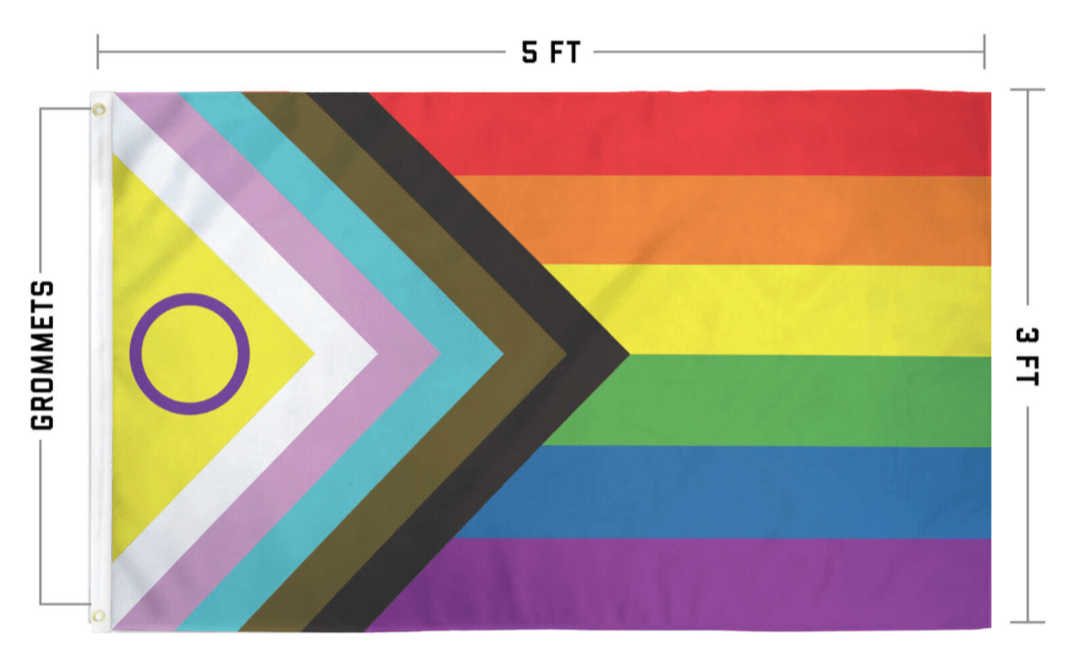
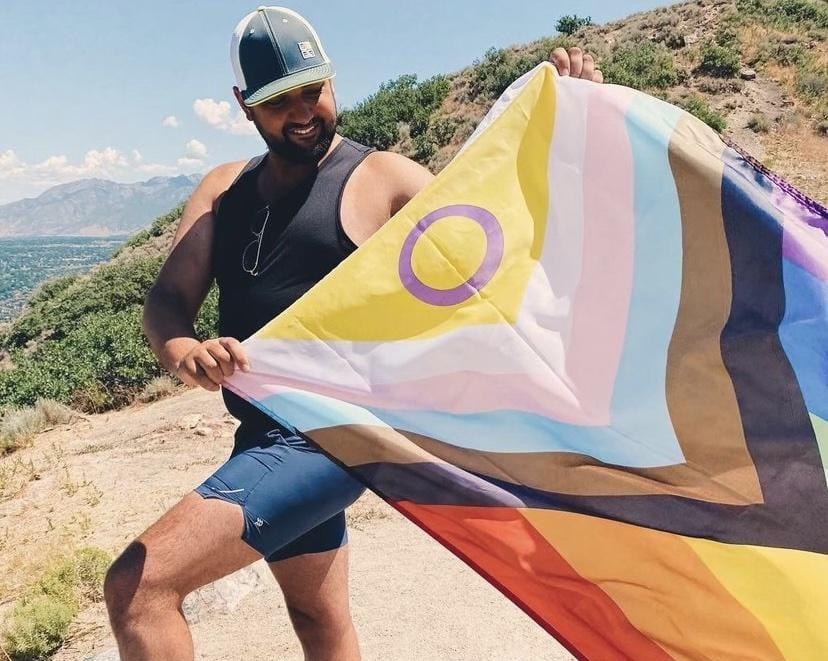
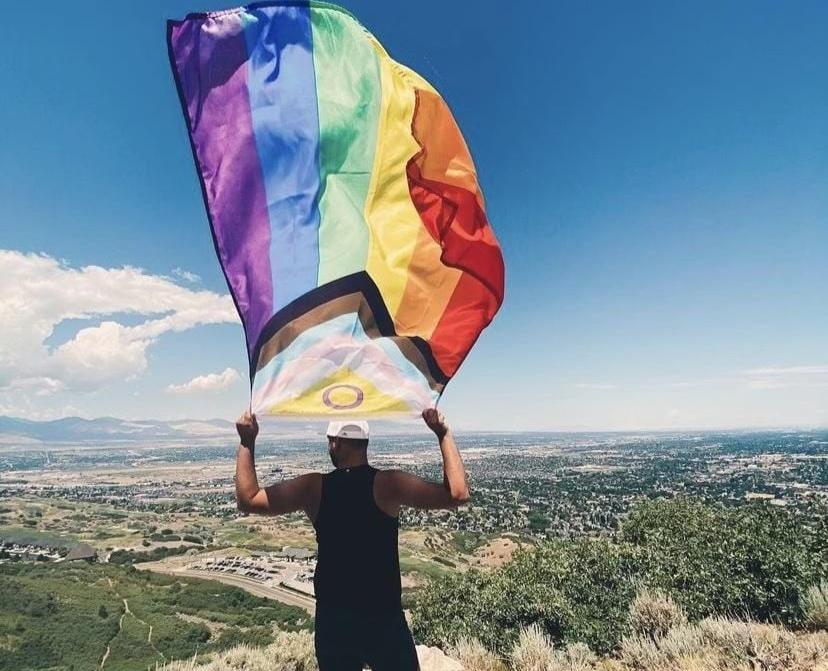
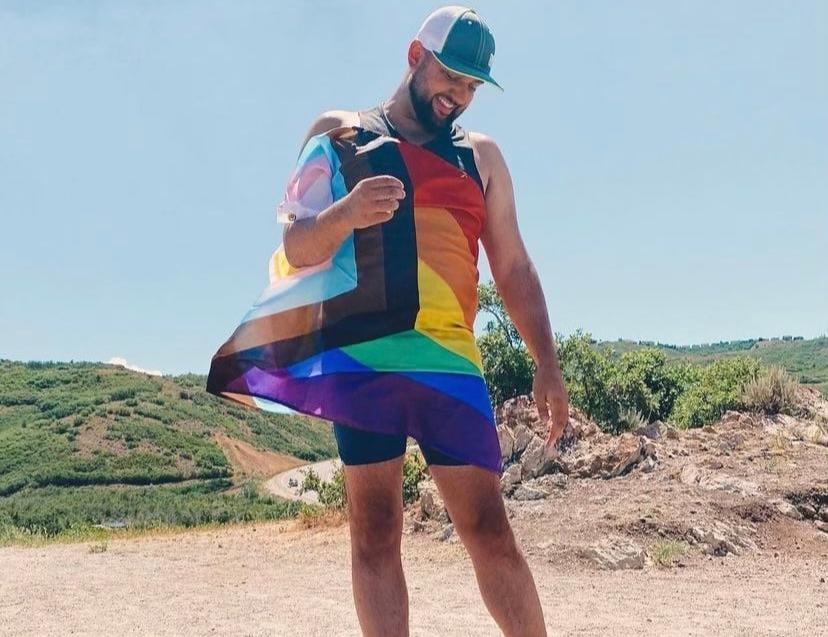
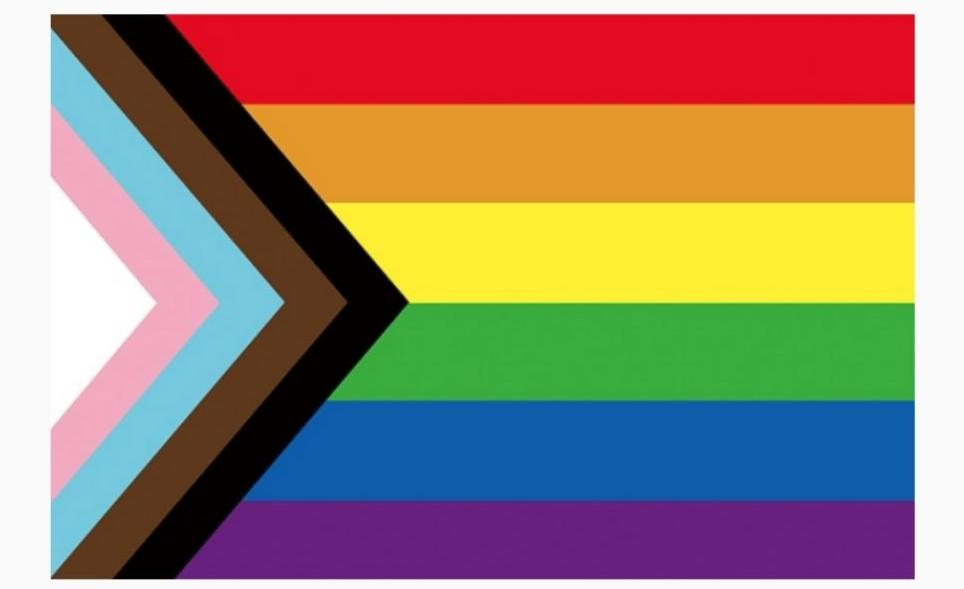
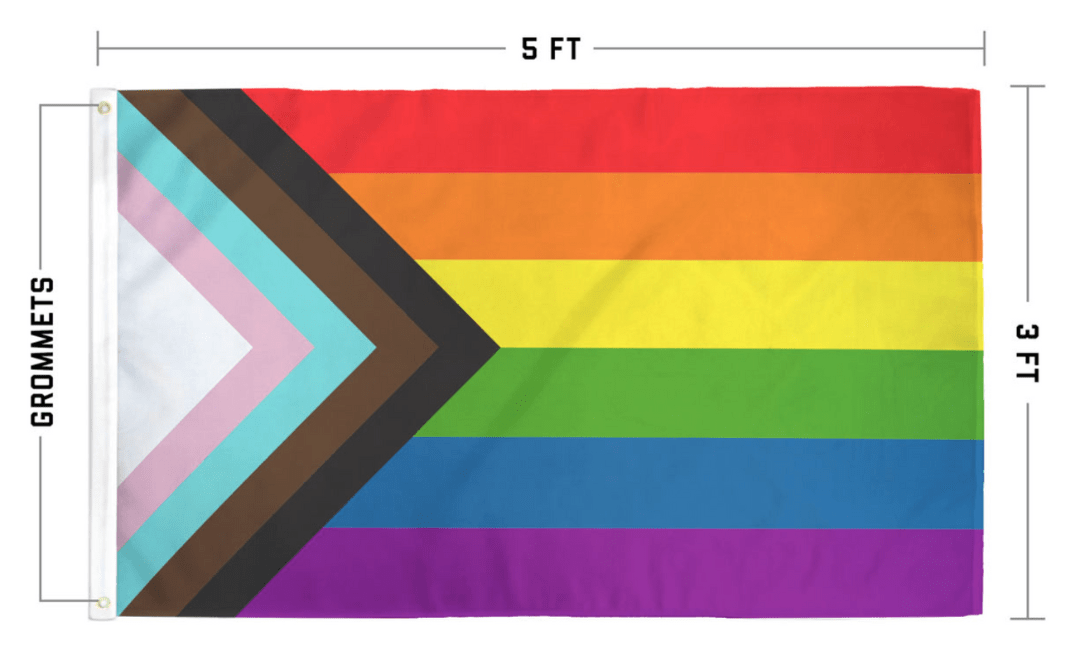
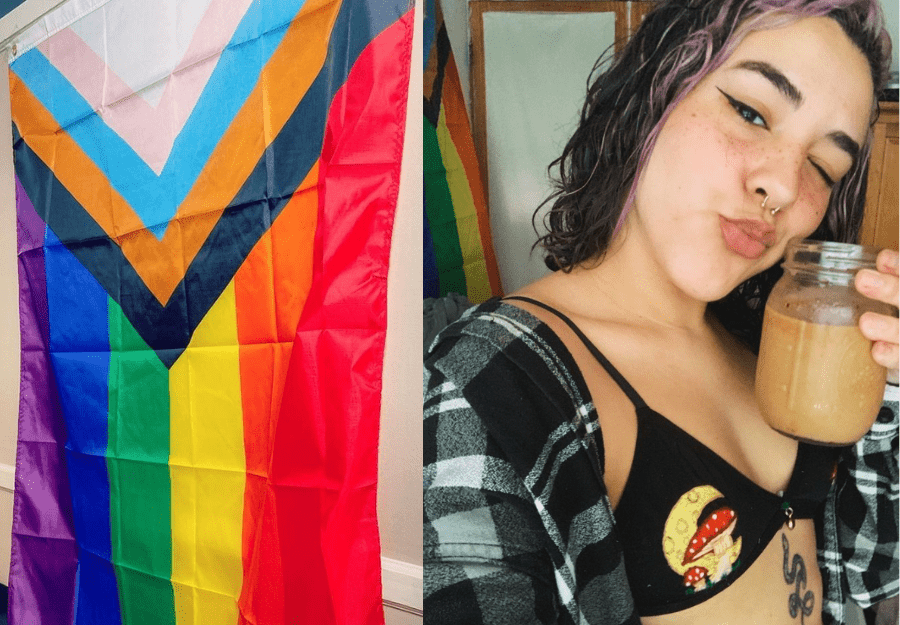
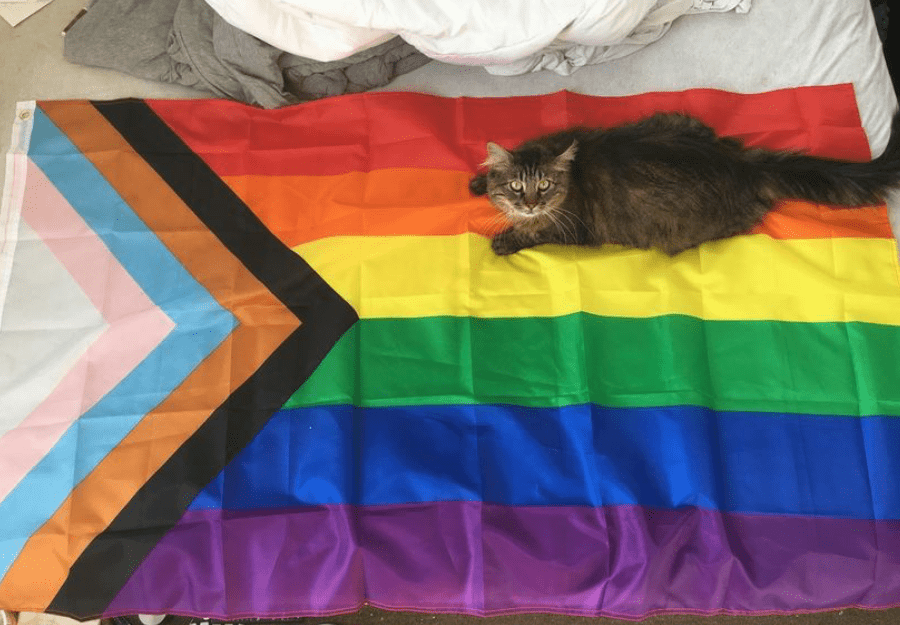
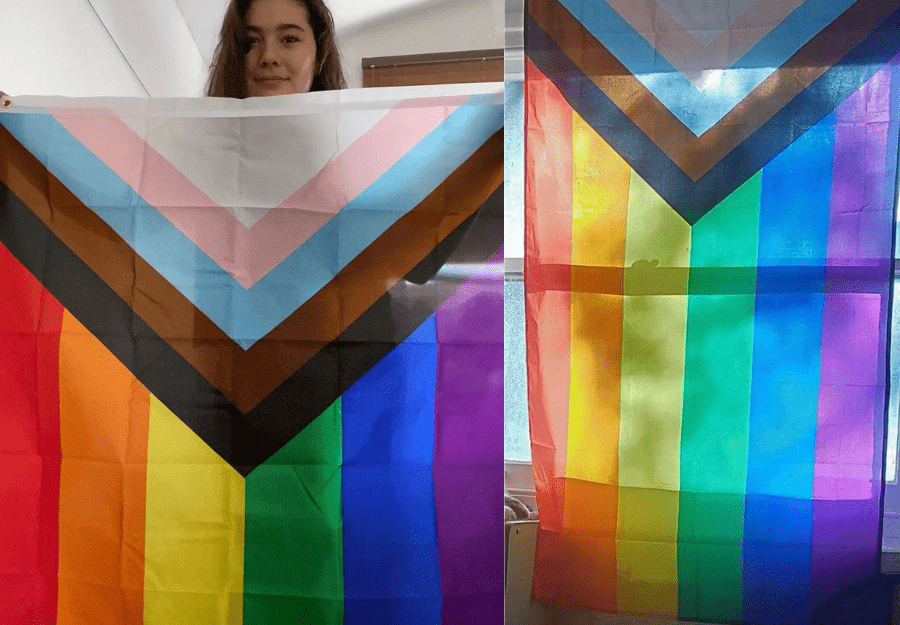
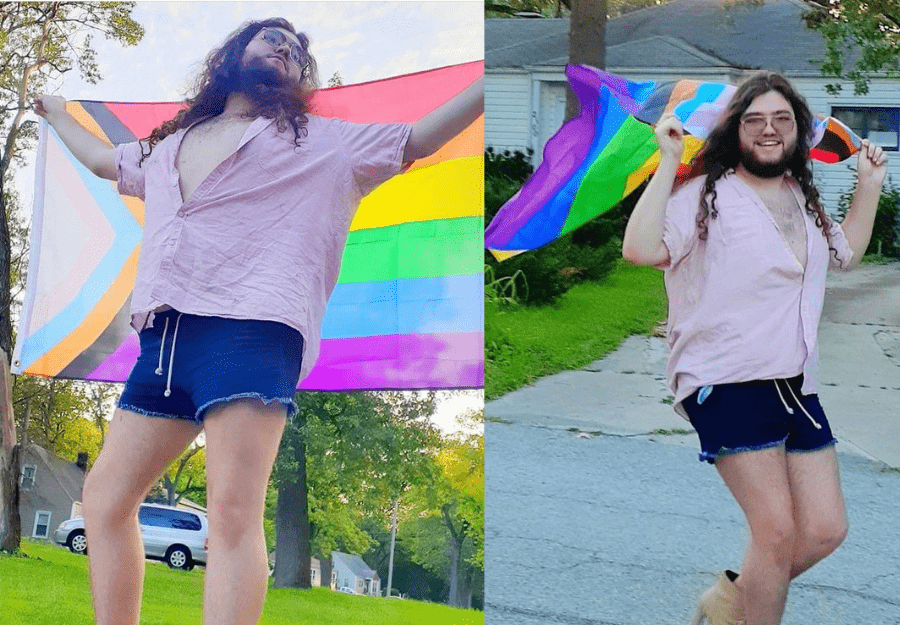
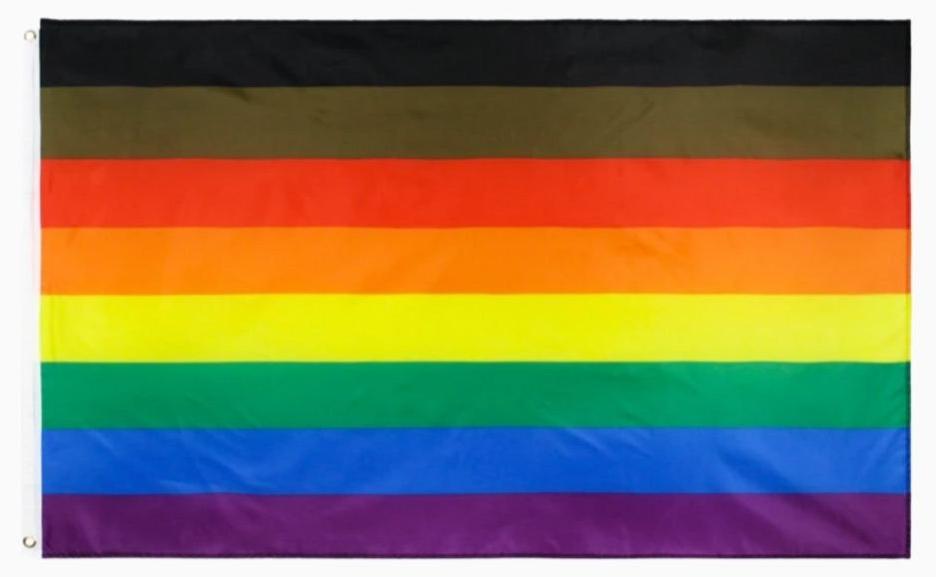
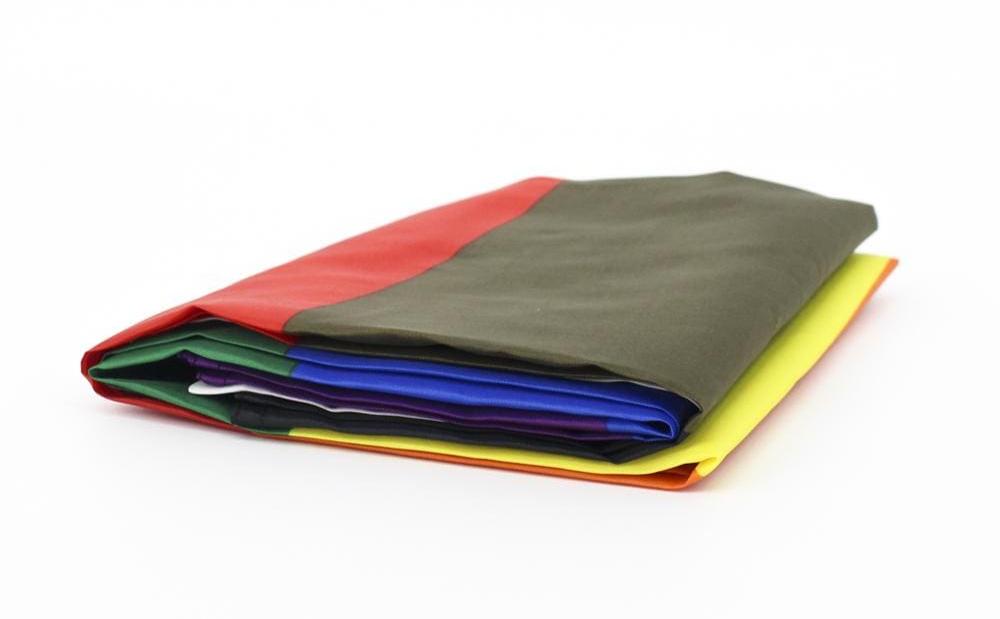
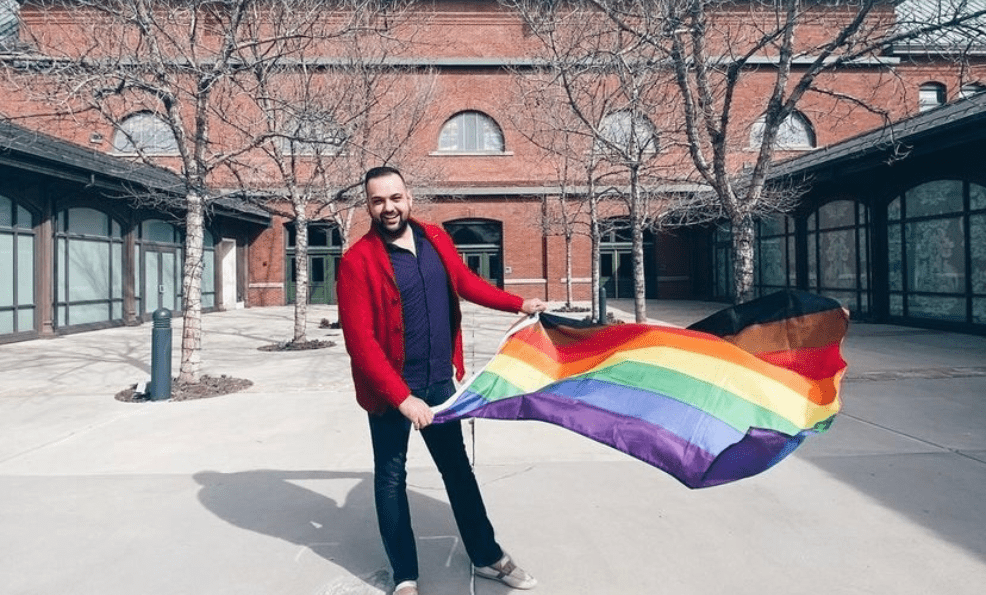
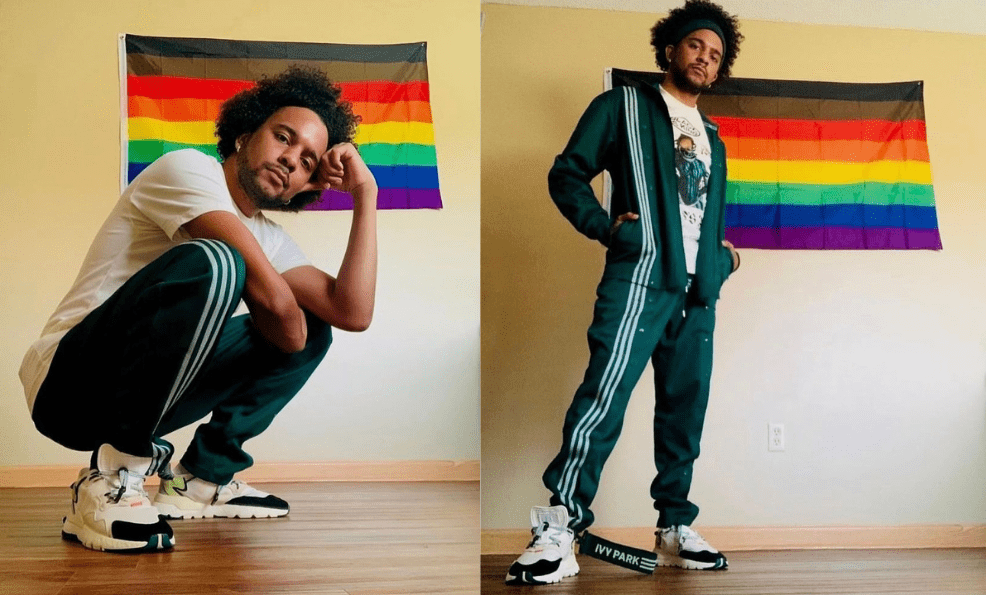
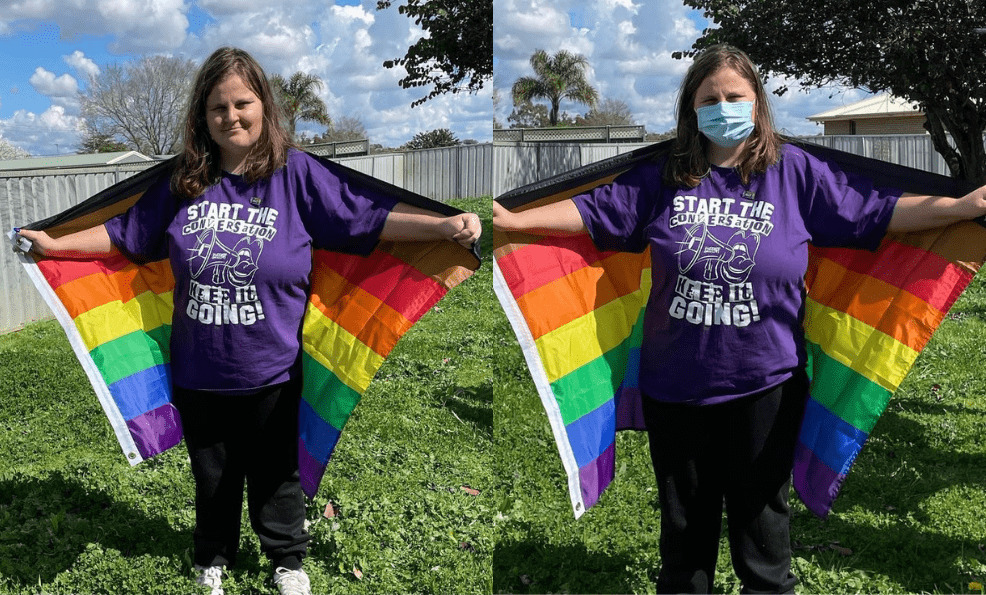
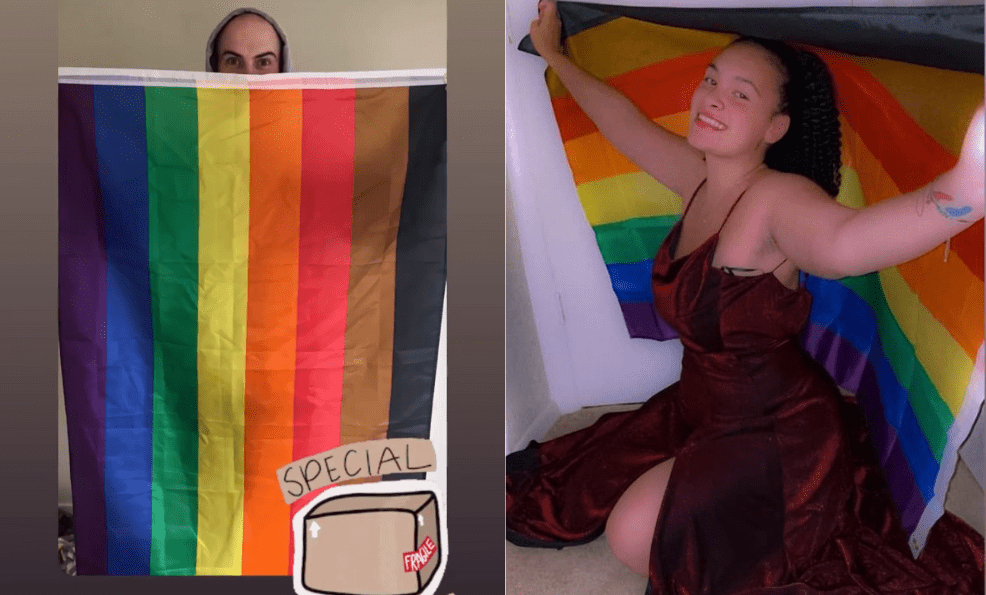
A yellow triangle carrying the same purple circle also appears on the intersex-inclusive Progress Pride flag, which Valentino Vecchietti added in 2021.
Which intersex flag do people actually fly?
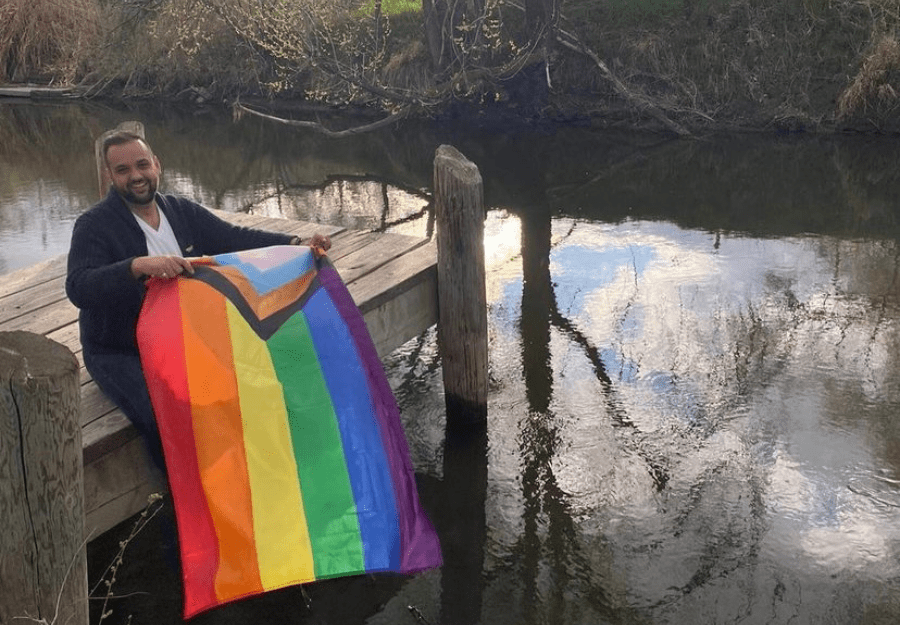
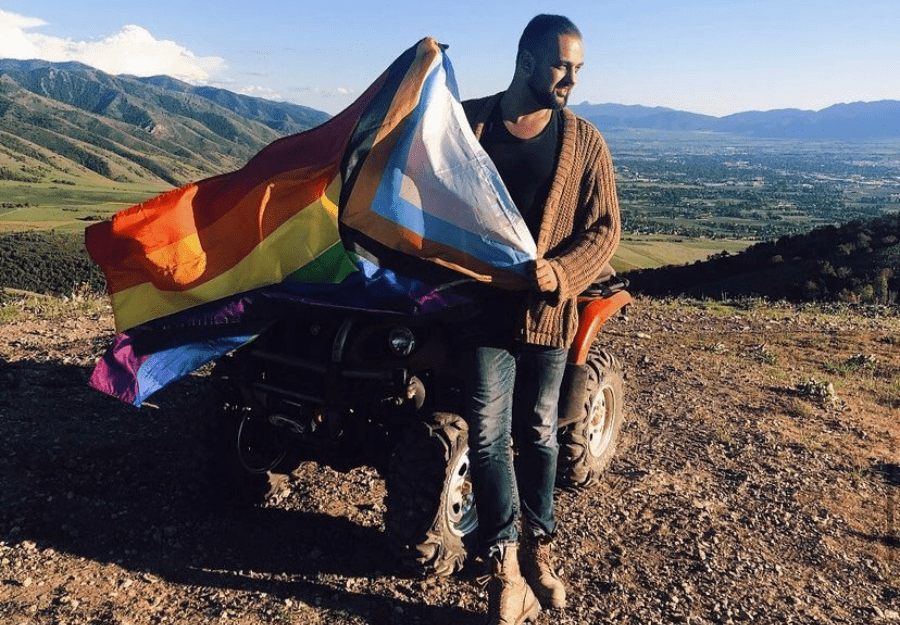
Our own order data gives a striking answer. Between October 2025 and September 2026, Pride Palace customers ordered 3,378 intersex-inclusive Progress Pride flags and 30 standalone Intersex Pride flags. That is more than 100 to 1.
There is a hopeful way to read that: thousands of people chose a flag with the intersex circle built into the community's own. There is also a harder way. The flag that names intersex people on their own is still one of the least-ordered flags in our catalog. Awareness Day exists for the gap between those two numbers.
If you want the full field, you can browse every Pride flag we carry or read what every Pride flag means. All sales benefit LGBTQ+ charities.
How can you show up on October 26?
- Learn the word and use it correctly. Intersex describes bodies. It isn't a slur, a diagnosis to whisper, or a synonym for trans.
- Listen to intersex-led groups. interACT publishes plain-language resources for families, schools and doctors.
- Back the ask. Support efforts to delay medically unnecessary surgery until an intersex person can consent.
- Be visible. A flag or a post on October 26 tells intersex people around you that you know they exist.
Frequently asked questions
When is Intersex Awareness Day?
October 26, every year. It opens a two-week stretch that ends with Intersex Day of Remembrance on November 8, the birthday of the 19th-century French intersex writer Herculine Barbin.
Why is Intersex Awareness Day on October 26?
On October 26, 1996, intersex activists protested outside the American Academy of Pediatrics conference in Boston. It was the first public demonstration by intersex people in the United States. The awareness day itself began in 2003, started by Betsy Driver and Emi Koyama.
What does intersex mean?
Intersex people are born with sex characteristics, such as chromosomes, hormones, gonads or genitals, that do not fit typical ideas of male or female bodies. It describes bodies, not gender identity or sexual orientation. Intersex people can be any gender and any orientation.
How many people are intersex?
Estimates depend on the definition used. The widely cited figure from Anne Fausto-Sterling's team is about 1.7% of births, which interACT also uses. Narrower definitions, such as Leonard Sax's, put it near 0.018%.
What does the intersex flag look like and who designed it?
A yellow field with an unbroken purple circle in the center. Morgan Carpenter of Intersex Human Rights Australia designed it in 2013. Yellow and purple were chosen because neither is coded as pink for girls or blue for boys.
Is intersex the same as transgender?
No. Intersex is about sex characteristics a person is born with. Transgender is about gender identity. Some people are both. The communities share a lot of ground, especially the right to make decisions about your own body.
How can I support intersex people on October 26?
Learn the basics, use the word intersex correctly, share resources from intersex-led groups such as interACT, and back efforts to delay medically unnecessary surgery on intersex children until they can consent for themselves.
Last updated: October 12, 2026


Comments
Muchas gracias. ?Como puedo iniciar sesion?